keskiviikko 22. heinäkuuta 2015

BRICS: THE END OF GEOPOLITICS


This transcription appears in the July 17, 2015 issue of Executive Intelligence Review.
ZEPP-LAROUCHE ON RUSSIAN RADIO

The BRICS New Paradigm Can End Geopolitics


[PDF version of this article]

The following is the full text of Helga Zepp-LaRouche's 20-minute interview with Radio Sputnik on July 6, 2015. The interview, which was aired live at 6 pm prime time in Russia, came in the context of an article by Sputnik and Russia Today covering the petition by Zepp-LaRouche's Schiller Institute, which calls for the United States and Europe to dump geopolitics, and join with the BRICS nations.

Estelle Winters, host for Radio Sputnik: Well, to discuss this, I'm now joined live on the line by the founder of the Schiller Institute, the initiator of the petition, Helga Zepp-LaRouche. Thank you very much for joining us here at Radio Sputnik.

May I ask you, first of all, how did you come up with the idea of initiating such a petition?

Helga Zepp-LaRouche: Well, I think first of all, geopolitics was the reason for two world wars in the Twentieth Century; and right now, if it would come to a third world war with thermonuclear weapons, it would lead to the extinction of mankind. So, therefore, the key question is, how can we overcome the thinking of geopolitics by establishing a New Paradigm. A New Paradigm which starts with the common aims of mankind.

The way to look at it is not from the standpoint of present interest of one country or a group of countries, but how can we define the future of humanity. Where do we want to be in 100 years from now? Do we want to be extinct, or do we grow up as a human species? I can tell you that the philosophical basis for this idea comes from a philosopher who is very well known in Russia, by the name of Nikolaus Cusansky (Nicholas of Cusa), who had the idea of thinking on the level of the Coincidentia Oppositorum—the coincidence of opposites—which is a method of thinking which very much informed [Russian-Ukrainian scientist] Vladimir Vernadsky. And Vernadsky called Cusansky the "divine Cusanus," and that is really the idea: that we have to move to a completely different kind of thinking about one humanity. And from that standpoint, try to solve all the conflicts of the here and now.

Winters: Why do you think cooperation with BRICS nations so important for sustainable development of the United States and Europe?

Zepp-LaRouche: Well, the reality is that since the Fortaleza Summit last year in Brazil, the BRICS countries have started to build a completely new system of economics, of economic cooperation. Of a new financial system signified by the AIIB [Asian Infrastructure Investment Bank], the New Development Bank, the Shanghai Cooperation Bank, and similar new financial institutions, which deliberately said "No" to the casino economy of the trans-Atlantic system; and deliberately want to only finance the real economy, infrastructure, and things which are in the common good of the people.

So, given the fact that the trans-Atlantic financial system is completely bankrupt—and that will show in the aftermath of the courageous Greek vote in the referendum—that the trans-Atlantic system is bankrupt and could explode at any moment. Because it's not just the Greek debt which hangs on it, but it's the entire international derivatives market, which amounts to probably around $2 quadrillion. The only solution would be that the trans-Atlantic countries go on the same kind of financial and economic policy as the BRICS, which would be possible if there were a European debt conference, eliminating all the useless, worthless debt of the derivatives. Then go for a global Glass-Steagall separation of the banks in the tradition of Franklin D. Roosevelt.

That was the key measure by which Franklin D. Roosevelt got the United States out of the Depression in the '30s. And right now, if the United States would take the leadership in going back to Glass-Steagall—and there are many important people in the Congress, as well as Martin O'Malley, who is a Presidential candidate, who is campaigning for the immediate re-introduction of Glass-Steagall—then there would be a platform for the United States and the European nations to cooperate with the BRICS countries in building the New Silk Road, building the cooperation between the Eurasian Economic Union and the New Silk Road. And that could be the kernel of a new world economic order, which would be in the benefit of all participating nations.

As the Chinese President Xi Jinping has always emphasized, we have to go to a win-win cooperation; this idea of a win-win cooperation is the way to overcome geopolitics. That is the key idea behind this BRICS resolution.

EIRNS/Christopher Lewis
Helga Zepp-LaRouche addresses an EIR seminar on the New Silk Road in Frankfurt, Germany on January 29, 2015


Winters: And tell me about this petition; you're convinced that it will make a difference?

Zepp-LaRouche: Oh yes, because we are using it for international outreach. We are contacting business leaders, politicians, mayors, city councils, to inform them that the BRICS system is an alternative system of economic cooperation. Because the western media have not really reported objectively about what the policy of the BRICS is. People don't know it, because the only articles which you can read are like "Putin is a dictator," "Xi Jinping is trying to replace American imperialism with Chinese imperialism," and such nonsense. So, people don't have a true idea that the BRICS countries represent a completely new model of political relations among major nations, which is also open to any other nation in the world.

My biggest hope would be, that the BRICS countries issue, at the BRICS summit, some kind of call, an outreach to the rest of the world to join that model. Because I think that something very urgently has to be done to bring the world away from the present brinksmanship policy, which could really go completely wrong, and lead to the extinction of us all.

What we are doing with this petition is to make sure that people know about the BRICS model; that we know there are enormous economic benefits for them, if they would cooperate. It's not just the BRICS countries who need a new economic approach; if you look at the European countries, all of southern Europe is really collapsing as a result of the vicious financial fascism of the Troika.

In the case of Greece, it has destroyed one-third of the real economy, but the situation in Italy, Spain, Portugal is not much better. So these countries urgently need the extension of the New Silk Road, the Eurasian Land-Bridge, into southern Europe to have a real program of reconstruction and economic build-up. The United States is not in such a great condition, either; it urgently needs a transcontinental fast train system, of the type China has been building—China has built 18,000km of excellent fast trains. The United States would greatly benefit if it would say, "OK, let's go back to an FDR approach," like the New Deal, the Tennessee Valley Authority approach; build infrastructure in their own country. That way we could all join hands and say, "Let's move beyond the danger coming out of geopolitics; and let's join hands to build a future for humanity as a whole."

Winters: Very quickly, were you surprised that 2,000 people signed this petition?

Zepp-LaRouche: No. Actually, I want to qualify that number of 2,000, because I think 500 of them represent very important institutional people; so it's not just single individuals. If you look at the list on the New Paradigm Schiller Institute website, you will find the signers there. And you will see that they are from a very broad range of people internationally who represent extremely important institutions. Then we also have so-called ordinary citizens who are signing it; and they are equally important.

I think what we want to do with this petition is to build an opposition of people who realize that it is much more in their interest to cooperate with Russia, China, India, Brazil, South Africa, than to have a confrontation with NATO against Russia and China. So, I think it would be very good if the listeners of this program would help to spread this resolution; make it known, so it can become a groundswell of people who say, "No, we need a new paradigm," and this is an historical moment in the history of mankind, where we have to absolutely prove that we, as a species, are morally fit to survive. I think the idea of having a just new world economic order is exactly the way to go.

Winters: We all know we're on the eve of another BRICS get-together, this time in Ufa. Do you believe that everybody is aware of this petition?

Zepp-LaRouche: No, I don't think so, but I think your interviewing me is a great help to make it more known; because as I said, this Ufa summit is a fantastic opportunity to not just have, to deal with the internal affairs of the BRICS and then the Shanghai Cooperation Organization countries. But I would really, really wish that it would be used to issue a call to all of humanity in the moment of the greatest danger, to make sort of an evolutionary jump ahead and define the common aims of mankind, and ask other countries to join in this effort. I think if that opportunity would be used, it could be a landmark in getting mankind out of this crisis.

Winters: And you have a representative in Ufa?

Zepp-LaRouche: Unfortunately, not. No, I would like to, but we have not been invited.

Winters: One last thing; what are your future plans to help promote better relations between the West and the BRICS?

Zepp-LaRouche: We are conducting a lot of international conferences. We just had a very important international conference in Paris, of the Schiller Institute, with 500 participants. We have an ongoing series of conferences in New York, in Manhattan, which is based explicitly the idea to get the United States back on its tradition as a republic in the tradition of the Founding Fathers and Alexander Hamilton. We've had conferences in Washington, in San Francisco, in Frankfurt, in Copenhagen; and we will have more such conferences. We would be very happy to conduct such conferences all around the world. Also, if people could join in; because we are doing what we can, but we really need other people to amplify our effort so that this idea of a New Paradigm becomes a common household word.

We have published a report, which is also very important, which is calledThe New Silk Road Becomes the World LandBridge. The Schiller Institute worked out the idea of a Eurasian Land-Bridge 25 years ago, and we already then called it the New Silk Road. We [have] had over the last 25 years, thousands of events—seminars, conferences—promoting the idea of the New Silk Road; and therefore, we were extremely happy when Xi Jinping in 2013 announced the New Silk Road as Chinese policy. I participated just two weeks ago, in a big conference in Yiwu in China on the New Silk Road; and I think it is extremely important that there will be more such conferences.

But for us, the New Silk Road is just a synonym. It's not just the transport connection between A and B, but it's a synonym for the New World Economic Order, and it's not just economics. It must be combined with a cultural Renaissance, because if you look at popular culture in the trans-Atlantic world right now, it is so degenerate, and so Satanic almost—bestial—that we absolutely want to revive Classical culture. German Classical music, Chinese Confucian thinking; in every culture you have some high points, and these have to be revived together. Then you can have a new dialogue of civilization based on the highest level of each culture; and I think that way we can get mankind to a completely new phase in the evolution of civilization.

I don't think we have reached the end of history. If we do what needs to be done now, in this moment, I think we are on the verge of a new golden Renaissance; but we have to mobilize as we have never mobilized before. Because it's an existential moment in history.


Winters: Thank you very much indeed for joining us here at Radio Sputnik. Founder of the Schiller Institute, Helga Zepp-LaRouche.

torstai 28. toukokuuta 2015

Dismantle Europe’s Racist and Murderous Migration Regime


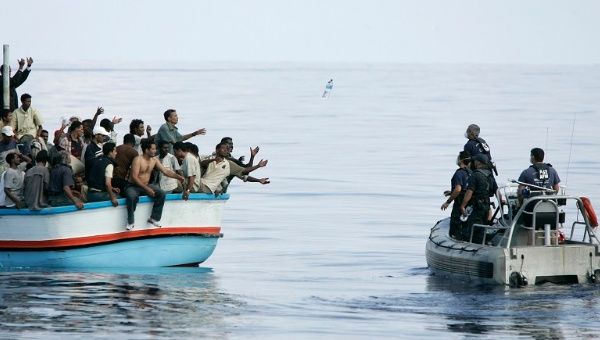
Tens of thousands of migrants risk their lives at sea in hopes of a better life. However, if they survive the perilous trek, they do so only to encounter apathy and discrimination, as well as rejection, in the European Union.
By: Jerome Roos


Tens of thousands of migrants risk their lives at sea in hopes of a better life. However, if they survive the perilous trek, they do so only to encounter apathy and discrimination, as well as rejection, in the European Union. | Photo: Reuters 

Published 26 April 2015

Saving the lives of migrants and refugees “shouldn’t bee a priority” for naval patrols, a top EU border agency official stated, revealing the bloc’s lack of interest in fighting the underlying causes of the migrant crisis. A week after a series of migrant boat disasters in the Mediterranean left over 1,200 people dead, the contours of Europe’s official response to the mass drownings are already starting to emerge — and the picture does not look pretty. On Wednesday, the head of the EU border agency Frontex declared that saving the lives of migrants and refugees 'shouldn’t be a priority' for naval patrols. Instead, EU leaders have declared war on the traffickers, vowing to crack down on criminal networks in Libya and elsewhere. 

This approach to the “migrant crisis” as an outgrowth of lawlessness and criminality overseas is dangerously wrongheaded. For all their talk of tackling the problem at its roots, EU leaders are once again fixating on the symptoms — treating the recent spate of sinkings as a failure of border control rather than the complex political, economic and humanitarian crisis it really is. In truth, these traffickers are merely exploiting a cynical opportunity that would not have existed if the EU had actually lived up to its international responsibilities by offering safe passage to migrant workers and political refugees alike. 

People are dying in the Mediterranean today not just because abusive smugglers are able to pursue their reprehensible business undisturbed, but because war, repression and deprivation are pushing millions of desperate souls to flee their homes in search of a better existence in Europe, only to be met with an extremely restrictive migration and deportation regime that leaves them with no options for a proper, legal crossing. It is the inhumane reality of Fortress Europe, with its racist and murderous overtones, that drives innocent migrants and refugees into the arms of opportunistic traffickers to begin with. 

Apart from stepping up search-and-rescue missions in the Mediterranean, the only way to prevent more tragic drownings in the immediate term would be to offer asylum and safe passage to all political refugees (especially from countries like Syria, Sudan and Eritrea), and to ease visa restrictions for economic migrants who wish to come to Europe to work. 

After all, if they had a legal way to enter Europe, none of these people would be willing to enslave themselves to criminal traffickers or pay extortionate fees for a crossing that will have them risk their lives on crammed and unseaworthy fishing boats. Meanwhile, a more long-term solution would have to address the underlying causes of mass migration itself: from the violent conflicts spreading across Africa and the Middle East to the widening international gulf between the haves and the have-nots, between core and periphery. No one would willingly trawl across the desert or entrust the lives of their children to the shabby dinghies of the smugglers if they actually saw an opportunity to live a decent life in their countries of origin. The best way for Europe to relieve the pressures of mass migration (insofar as migration is a problem at all) would be to fight its underlying causes — something EU leaders have not shown the slightest interest in. 

The problem, of course, is that our leaders are cowards who do not dare to do the right thing for fear of being punished at the polls. Racist Europeans have long guarded their borders and their privileges with virulent jealousy, but there is no doubt that six years of austerity have rendered electorates across the continent more anxious and xenophobic than ever. Right-wing firebrands like Nigel Farage, Marine Le Pen and Geert Wilders are making headway with their anti-immigrant rhetoric, and centrist politicians everywhere are enthralled to their exclusionary populist discourse — one that is wildly out of touch with the complex realities of an increasingly turbulent and interconnected world. 

And so the best thing EU leaders could agree upon during their crisis meeting in Brussels on Thursday was to triple the budget for the Triton sea surveillance mission and to offer an additional 5,000 resettlement places to refugees who survived the crossing. Both measures are utterly farcical: the 5,000 resettlement places pale into insignificance when contrasted to the 3.5 million people who have been displaced in the Syrian civil war alone, while Frontex chief Fabrice Leggeri was quick to emphasize that “Triton cannot be a search-and-rescue operation [because] this is not in Frontex’s mandate, and this is in my understanding not in the mandate of the European Union.” 

In the past 15 years, 22.000 people are estimated to have drowned in the Mediterranean in search of a better future in Europe. Last year alone, some 3.500 people lost their lives trying to make the crossing. The numbers are likely to skyrocket in the decades ahead, as the untold damage wrought by global capitalism, regional conflict and climate change will force millions more from their homes. Many of these people still look to Europe with hope and aspiration — yet the beacon they dream of responds by erecting walls and deploying frigates to keep them out. 

Apparently Europeans today would rather recover dead bodies from the sea than welcome living human beings into their societies. This unspeakable brutality has to stop. Europe's racist and murderous migration regime must be dismantled. The easiest, fastest and by far the cheapest way to prevent more unnecessary deaths is to ease visa requirements for migrant workers and to offer safe passage and resettlement to all political refugees. 

There is nothing radical or idealistic about such proposals: it is simply our international responsibility and our historical duty as human beings and privileged citizens of this affluent continent. If we still believe in our own values, we must open our borders to those who yearn for life. Nothing less will do. Jerome Roos is a PhD researcher in International Political Economy at the European University Institute, and founding editor of ROAR Magazine. 

Follow him on Twitter at @JeromeRoos. 

This content was originally published by teleSUR at the following address: 
http://www.telesurtv.net/english/opinion/Dismantle-Europes-Racist-and-Murderous-Migration-Regime-20150426-0008.html. If you intend to use it, please cite the source and provide a link to the original article. www.teleSURtv.net/english

Theater of the Absurd By: Paul Street


Theater of the Absurd


25 May 2015


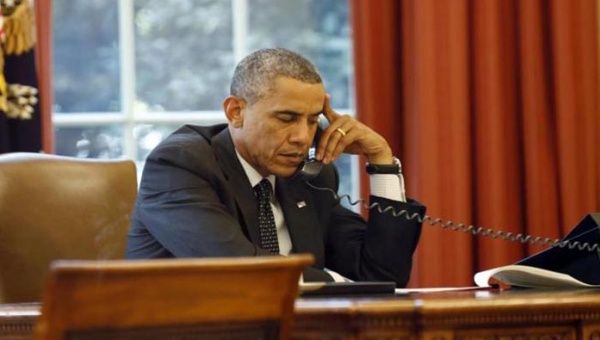
Elected in the brand name of peace, the Barack Obama has joked to his White House staff that he is “good at killing people.” Hopey-Climate-Changey If want to keep up with United States political culture, you’d better have a strong stomach for the absurd. Four days ago (I am writing on Sunday, May 24th), for example, U.S. President Barack Obama made a stirring speech to graduating U.S. Coast Guard cadets about the scientifically proven reality of anthropogenic global warming (AGW). 


Obama discussed climate change as a grave peril to “our national security” that “undermines the readiness of our [military] forces.” He failed to note that the ecological impact of AGW has transcended nuclear war as the leading threat to the continued viability of human life on Earth. That was pretty absurd. 

So was the spectacle of the president speaking against the specter of AGW after he had just recently cleared the way for the giant global and climate-changing oil corporation Royal Dutch Shell to begin drilling in the Arctic Ocean this summer. Shell got approval to petro-pillage the U.S. portion of the Chukchi Sea off the coast of Alaska. The company’s drilling leases are in a remote, untouched, and pristine area that provides critical habitats for several rare species and large marine mammals. It’s a treacherous area characterized by extreme storms, likely to cause massive oil spills. The New York Times described Obama’s decision as “a devastating blow to environmentalists.” It might have added “and to prospects for a decent future.” 

Environmental groups have long warned against the madness of drilling in the area, which holds 22 billion barrels of oil and 93 trillion cubic feet of natural gas. More than five years ago, Obama almost singlehandedly undermined desperate international efforts to set binding limits on global carbon emissions in Copenhagen. His environmental record ever since has been calamitous, greasing the skids for the United States’ fracking-based emergence as the world’s leading oil and gas producer in the name of so-called energy independence. 

Such is the record of a president who was elected on a promise to (among other things) reduce climate change. And the “first green president” is not done contributing to the very process he described to Coast Guard graduates as a dire threat to U.S. security. Obama is pushing the Trans Pacific Partnership (TPP) through Congress over and against the public’s understandable suspicion of such “free trade” (investor rights) agreements. As the environmental group Friends of the Earth reminds us, the TPP is “a platform for economic integration and government deregulation for nations surrounding the Pacific…

The TPP is a potential danger to the planet, subverting environmental priorities, such as climate change measures and regulation of mining, land use, and bio-technology.” There are a number of understandable and respectable responses (horror and disgust come to mind) to Obama’s Arctic Ocean move, but surprise is not one of them. Next time you see a liberal Democrat U.S. environmentalist, ask him (to amend the absurd Sarah Palin): “so how’s that hopey-climate-changey thing working out for ya?” 

Populist Hillary Clinton 

Meanwhile, the front-running U.S. presidential hopeful Hillary Clinton has recently been spending a lot of time in Iowa in local coffee shops, restaurants, and community colleges. She’s impersonating a nice middle-class lady who wants to fix the rules of game so that the wealthy corporate and financial Few no longer dominate the country and “everyday people” get a fair shake. She’s striking the populist pose. It’s a farce. 

As New York Times reporter Carolyn Ryan recently noted, the Clintons “operate…in an international orbit” and “a world awash in money and connections and a very privileged place.” Mrs. Clinton enjoys a net worth of $13 million and “a high-flying lifestyle” (Politico). New disclosure forms revealed last week that she and her husband “earned” $30 million since January of last year. 

Most of that money – more than $25 million — came from roughly 100 paid speaking engagements given largely to elite corporate and financial audiences. The Clintons’ long pro-Big Business, militantly neoliberal policy record (a topic I addressed in a recent ZNet essay) is richly consistent with these opulent wealth and “earnings” (takings). It’s unsettling to see Hillary masquerading as a champion of “everyday people” in their struggle with the plutocratic 1 percent. It’s absurd. Still, many “mainstream” media personnel seem absurdly willing to play along with the fake-populist ruse. 

 During a recent discussion of the social Democrat Bernie Sanders’ bid to challenge Hillary Clinton in the Democratic presidential primaries on the “P”BS Newshour, the constantly smiling political commentator Amy Walter pronounced that Hillary had gone so far left that “on economic issues, I don’t know that there is that much room for somebody like Bernie Sanders to outflank her.” That was an absurd comment. There’d be quite a bit of such room if reporters and commentators like Walter would decide to function as serious investigators instead of corporate hacks. Any honest and thoughtful look at Sanders’ 12-point program would identify numerous areas where he stands well to the progressive portside of Hillary Clinton on economic issues. 

The Not-So Nordic Bernie Sanders 


Not that Sanders is beyond nonsense. He has courageously identified himself with the social-democratic policies of Scandinavia, going on ABC News to say that the US has a lot to learn Sweden, Norway, and Denmark when it comes to social programs and the distribution of wealth and income. He fails, however, to call for the significant reductions in the United States’ giant “defense” (empire) budget, which eats up 57% of U.S. federal discretionary spending and accounts for nearly half the world’s military spending. Giant cuts in the nation’s gargantuan war budget would be required to implement his populist economic program and implement the “Nordic model” of welfare capitalism. 

The Scandinavian states have tiny military budgets compared to the U.S., something Sanders fails to mention in accord with his continuing faith in, or refusal to openly question, the necessity and virtue of the Pentagon System – and in accord with his own captivity to so-called military Keynesianism. Here he is repeating the most elementarily obvious mistake of previous Democratic Party- and Empire-captive U.S. “socialists”– people like Bayard Rustin and Michael Harrington), who failed to forthrightly oppose the military system even as it strangled the War on Poverty in its fiscal cradle. Absurd. 

IS/US 


Of course, you can almost hear Sanders and his advisors discussing the untouchable nature of the US military budget in light of media reports on the continuing forward march of the barbaric and arch-reactionary Islamic State (IS) in Iraq, Syria, and (apparently now even) Libya. Who could make a serious bid for the U.S. presidency calling for the slashing of the Pentagon budget while the nightly news carries regular chilling images of depraved, arch-fundamentalist IS head-choppers on the black-flagged rise? 

The deeper absurdity, of course, is that the IS is largely the creation of the very U.S. military empire that no serious U.S. Democratic presidential candidate is willing to seriously confront. The mindless devastation criminally imposed on Iraq – on absurdly false pretexts – by the world’s greatest killing, dismembering, destroying, and displacing machine (the U.S. military) in the openly absurd name of “Iraqi Freedom” gave rise to al Qaeda in Iraq and then to the Islamic State. U.S.-led Western support for a prolonged and bloody armed uprising in Syria re-destabilized Iraq and expanded the jihadist base in Syria (where al-Qaeda-like elements easily hijacked the “moderate opposition” to the Assad regime). 

 As the heroic British Middle East correspondent Patrick Cockburn notes: “ISIS is the child of war…The movement’s toxic but potent mix of extreme religious beliefs and military skill is the outcome of war in Iraq since the US invasion of 2003 and the war in Syria since 2011. Just as violence in Iraq was ebbing, the war was revived by the Sunni Arabs in Syria…it was the war in Syria that destabilized [bordering] Iraq when jihadi groups like ISIS, then called al-Qaeda in Iraq, found a new battlefield where they could fight and flourish…

It was the US, Europe, and their regional allies in Turkey, Saudi Arabia, Qatar, Kuwait, and United Arab Emirates that created the conditions for the rise of ISIS. They kept the war going in Syria, though it was obvious from 2012 that Assad would not fall… 
He was not about to go, and ideal conditions were created for ISIS to prosper.” 

Nobel Peace Farce 

Elected in the brand name of peace, the Barack Obama has joked to his White House staff that he is “good at killing people.” He is also proficient at broadening the political and ideological spread of jihad by widening the geographic reach and the frequency of America’s practice of murdering people suddenly from the sky. George W. Bush may have him beat when it comes to body count, but Obama takes the prize when it comes to technologically sophisticated killing scope and personal involvement in imperial homicide. 

Obama individually oversees the Pentagon and CIA’s Kill List, which designates “bad guy” Muslims for remote-control assassination without the irritating technicalities of law and politics – and without the risk of U.S. casualties. These cowardly killings and their considerable collateral damage have been remarkably effective, emotionally potent jihadist recruiting bonanzas from Libya, Sudan, Somalia, and Yemen to Syria, Iraq, Afghanistan and Pakistan – and indeed in Muslim communities around the world. 

 They have also mocked the Nobel Peace Prize that some silly Scandinavians preposterously gave Obama in 2009 – and the bust of Dr. Martin Luther King that sits behind Obama in the Oval Office. Perhaps the Nobel committee hoped that Obama would be guided by the revered award in the same way that Dr. King was four decades earlier. As King said on April 4, 1967, explaining why he could not stay silent on the U.S. crime in Vietnam, “a burden of responsibility was placed upon me in 1964: I cannot forget that the Nobel Prize for Peace was also a commission – a commission to work harder that I had ever worked before for ‘the brotherhood of man.’ 

This is a calling which takes me beyond national allegiances …to the making of peace.” Obama has taken a rather different path, keeping the American “machine set on kill” (Allan Nairn’s excellent metaphor). In light of extensive advance warnings produced by a hardy cadre of U.S. and other (e.g. the Australian writer and filmmaker John Pilger) Left writers and activists (this writer included), it was foolish for the Nobel selectors to expect anything else from Kill List Obama. It’s a useful reminder that the United States has no monopoly on elite absurdity. 

 Paul Street’s latest book is They Rule: The 1% v. Democracy (Paradigm, 2014) 0 0 Tags Barack Obama U.S.

This content was originally published by teleSUR at the following address:
http://www.telesurtv.net/english/opinion/Theater-of-the-Absurd-20150525-0039.html. If you intend to use it, please cite the source and provide a link to the original article. www.teleSURtv.net/english

maanantai 25. toukokuuta 2015

GMO-colonization of Ukraine


GMO-colonization of Ukraine

Nikolai MALISHEVSKI | 23.05.2015 | 00:00


Powerful Western corporations want to make Ukraine the largest GMO (genetically modified organisms) grower. As time goes by, genetically modified organisms can become a poison to take away many human lives. This fact is ignored. Europe does not need GMO (the production is strictly limited there). Ukraine could very well become a test ground for GMO crops in Europe, something the rest of the European Union has been looking to prevent. Monsanto, an American multinational agromultinational and agricultural biotechnology corporation, is now moving in on Ukraine with plans to institute GMOs nationwide.

More than 40 years ago, Agent Orange was one of 15 herbicides used by the U.S. military as a defoliant in the Vietnam War. The former Monsanto Company was one of nine wartime government contractors who manufactured it to eliminate vegetation (many believe the use of Agent Orange in Vietnam was paramount to committing a military crime. It gives rise to cancer and destroys human immune system).


Monsanto says soybeans production will bring in over $1 billion to increase the corporation’s profits twofold in five years. Monsanto is powerful enough to influence the US government. For instance, in 2013 US President Barack Obama signed into law the controversial HR 933 (the «Monsanto Protection Act»), which contains a provision that grossly protects biotech corporations such as the Missouri-based Monsanto Company from litigation. With the president’s signature, agriculture giants that deal with genetically modified organisms (GMOs) and genetically engineered (GE) seeds were given the go-ahead to continue to plant and sell man-made crops, even as questions remain largely unanswered about the health risks these types of products pose to consumers.

Genetically modified organisms have so far been banned by law in Ukraine, but the EU association agreement signed by the new Ukrainian government calls for closer cooperation in biotechnology.

In Walking on the West Side: the World Bank and the IMF in the Ukraine Conflict, a report released in July 2014, the Oakland Institute exposed how international financial institutions swooped in on the heels of the political upheaval in Ukraine to deregulate and throw open the nation’s vast agricultural sector to foreign corporations, including genetically modified organisms and cultures. Jesus Madrazo, the Vice President of Monsanto, has said «Ukraine has the opportunity to further develop the potential of conventional crops, which is where we are currently concentrating our efforts. We also hope that at some point biotechnology is a tool that will be available to Ukrainian farmers in the future». The Ukrainian government and Monsanto do their best to make it materialize as soon as possible.

U.S. corporation Monsanto plans to build a seed plant in Ukraine in 2016. This was discussed at the meeting in Washington between Minister of Agriculture and Food of Ukraine Oleksiy Pavlenko with the representatives of Monsanto. The plant will manufacture corn seed of conventional selection for the domestic market and export. At the same time Monsanto Ukraine is launching a social development program titled «Grain Basket of the Future». It has been formally announced that the project will help rural villagers in the country improve their quality of life.

Monsanto says it is looking for places to build corn seed plants in the so called corn belt of Ukraine. The region of Vinnitsa (Vinnytsia) is on the priority list. Valeriy Khadzhymatov, the chief executive of the Seed Association of Ukraine, says Monsanto accounts for around 20% of Ukraine’s corn seed production. With a factory launched in 2015 its share will grow by 10%.

Robert Hunter Biden, the son of US Vice President Joe Biden, is currently Chairman of the Board of the World Food Program USA (launched in support of the United Nations World Food Program - WFP). His appointment in 2014 to the board of the Ukrainian energy company Burisma Holdings has attracted controversy. He is the one to provide political support for Monsanto activities. Monsanto is a corporation with teeth - it has signed a contract with Academi, the largest private military contractor (it had been called Blackwater till February 2009, and then it changed its name for Xe Services LLC to be renamed into Academi in January 2010). According to unconfirmed information, Monsanto has purchased Academi.

The corporation also has its spin doctors in Ukraine – the U.S.-Ukraine Business Council (USUBC). Morgan Williams, president and CEO of the U.S.-Ukraine Business Council, says genetically modified seeds should be legalized in Ukraine to boost agricultural production. The U.S.-Ukraine Business Council’s 16-member Executive Committee is packed with U.S. agribusiness companies, including representatives from Monsanto, John Deere, DuPont Pioneer, Eli Lilly, and Cargill.

* * *

The Food Safety & Sustainable Agriculture Forum 2014 held in China’s capital on July 25-26 included genetic researchers, university professors, medical doctors, veterinarians, livestock farmers, arable farmers, agricultural consultants, mothers, NGO founders and leaders and social activists from China, Taiwan, the U.S.A, Russia, U.K., France, Denmark, Germany, Australia, New Zealand, Argentina, Brazil and Peru. Irina Ermakova, VP of Russia’s National Association for Genetic Safety, tells the forum was introduced to dire information on genetic deformity and sterility of animals, the pathology of internal organs and reproduction disorders among pigs, autism and imbecility among children – all caused by the use of genetically modified organisms.


All this plethora of information about negative effects of GMO is of no importance to Ukrainian government. The regime gradually and irreversibly converts the country into a reservation of Monsanto.

In early May Ukrainian media was reported with delight that Monsanto Ukraine (the branch off Californian giant) offers its new product - selective herbicide Guardian Tetra.


The process of GMO-colonization of Ukraine is at full speed…

lauantai 23. toukokuuta 2015

Näkökulma: Älä ryssi, suomalainen

Yle maailmalla  | 


Moni suomalainen suhtautuu Venäjään nykyään aiempaa epäilevämmin, jopa vihamielisesti. Mutta voisiko tavallisiin venäläisiin vielä yrittää asennoitua ilman ennakkoluuloja, kysyy Erkka Mikkonen Moskovasta.

Erkka Mikkonen.
Kuva: Yle
Me suomalaiset olemme aina rakentaneet identiteettimme sen mukaan, keitä me emme ole. Ruotsalaisiksi meistä ei ole, vaikka pyrkisimmekin toimimaan länsinaapurin esimerkkiä seuraten.
Venäläisiä meistä taas ei saa edes väkisin, eikä suomalaisen ajattelun mukaan idästä ole loputtoman uhkan lisäksi mitään muuta tullutkaan.
Parhaimmillaankin Venäjä tuntuu olevan vain talviuntaan nukkuva karhu, jota ei pidä turhaan ärsyttää. 
Suomesta päin katsottuna venäläisten tapa elää on yksinkertaisesti väärä. Ja mikä pahinta, he eivät tunnu edes itse tajuavan sitä.

Meidän vaalimamme sananvapaus, ihmisoikeudet ja demokratia eivät näytä juurtuvan Venäjälle. Sen sijaan viranomaisten mielivaltaa, korruptiota ja köyhyyttä on sitäkin enemmän.
Kun Putin pullistelee ja kansa tukee varauksetta, on yhtälö selvä: kaikki venäläiset ovat pahoja
Viimeistään Venäjän häikäilemätön toiminta Ukrainassa on saanut suomalaisen sormen taas pystyyn: venäläinen on ja pysyy pahana, vaikka sitten voissa paistaisi.
Venäjän johdon röyhkeät puheet suurvalta-aseman palauttamisesta ja historiallisesta oikeudesta ulkovenäläisten suojelemiseen nostavat luonnollisesti suomalaisten karvat pystyyn. Venäjän toiminta suorastaan velvoittaa suhtautumaan epäluuloisesti tai jopa vihamielisesti kaikkeen, mikä liittyy Venäjään.
Ennakkoluulojen kasvaessa lopetamme ajattelemisen. Kun Putin pullistelee ja mielipidetutkimukset kertovat kansan tukevan häntä varauksetta, on yhtälö selvä: kaikki venäläiset ovat pahoja.
Keksitkö sinä yhtään hyvää asiaa venäläisistä?
Suomalaisten stereotypioiden mukaan venäläisethän pröystäilevät, eikä heillä ole käytöstapoja. He meikkaavat liikaa ja pukeutuvat mauttomasti.
Pitäisikö ihmiseen suhtautua ennen kaikkea yksilönä, eikä maansa edustajana?
Venäläiset ovat äänekkäitä, eivätkä kunnioita toisia. He haisevat hieltä.
Ja ennen kaikkea venäläiset kuvittelevat olevansa parempia kuin muut ja korostavat loputtomasti omaa kansallista ylivertaisuuttaan.
Mutta miten on meidän suomalaisten laita?

Olisikohan meidän aika päästä eroon turhista ennakkoluuloistamme? Voisimmeko suhtautua venäläisiin kuten mihin tahansa kansallisuuteen, historian vääryyksistä tai poliittisista kriiseistä huolimatta?
Pitäisikö ihmiseen suhtautua ennen kaikkea yksilönä, eikä maansa edustajana?

Jos emme pysty näkemään venäläisvastaisten ennakkoluulojemme taakse, sorrumme samanlaiseen nurkkakuntaisuuteen, jollaisesta niin usein itse syytämme venäläisiä.
Informaatiosodan ja propagandan aikakautena avoin suhtautuminen venäläisiin saattaa ensituntumalta kuulostaa lapsellisesta, jopa silkalta trollaukselta.
Silläkin uhalla: suomalainen, älä ryssi, vaan suhtaudu tavalliseen venäläiseen ilman turhia ennakkoluuloja.

torstai 30. huhtikuuta 2015

Putin Accuses 'Quasi-Partners' of Counting on Russia Collapse


Putin says that there were vultures waiting to pick Russia apart. They’ll have to keep waiting!
Elizabeth Piper

(Reuters)

Darya Korsunskaya 16 hours ago |


Still kicking

ST PETERSBURG, Russia, (Reuters) - President Vladimir Putin accused some of Russia’s “quasi-partners” on Monday of counting on the country’s collapse by cutting its banks off from the global financial system at a time when oil prices had plunged.


“After the fall in oil prices from $100 a barrel to 50, 160 billion out of 500 did not come into the economy,” he said, apparently counting in dollars.Speaking in Russia’s second city of St Petersburg, Putin said they had been proved wrong and the economy had easily weathered the crisis, deepened by Western sanctions imposed to punish Moscow over its policies in Ukraine.


“It’s a big figure. And at the same time our quasi-partners limited access of our banks to refinance on the European markets.”


Putin did not make clear what he included in his calculations. Russia has lost income because of a fall in export revenues in dollar terms, a sharp decline in foreign investment and capital flight.


“Apparently someone was counting on some sort of collapse,” Putin told lawmakers. “No collapse happened. The Russian economy is easily overcoming these artificial barriers … The peak of (debt) payments has passed. If someone counted on causing some kind of collapse, nothing came of it.”


Putin and his government have become increasingly upbeat about the economy, lauding a recovery of the rouble which, after falling by around 40 percent last year on weak oil prices and sanctions, has firmed by about 15 percent this year.


But Russia is slipping into recession and consumers are hurt by double-digit inflation, spurred by a ban on Western food imports imposed in retaliation to the Western sanctions.


Russian Prime Minister Dmitry Medvedev said earlier this month that Russia had lost 25 billion euros from sanctions, or 1.5 percent of gross domestic product, but could cope with the “new economic reality”.